Vivaldi, Le quattro stagioni-interpretari notabile:
Henryk Szeryng
Itzhak Perlman
Anne-Sophie Mutter
Giuliano Carmignola
Nigel Kennedy
Salvatore Accardo
Ruggiero Ricci
Yehudi Menuhin
Archives du blog
Affichage des articles dont le libellé est settecento. Afficher tous les articles
samedi 22 février 2020
IMPRIMARI VIVALDI LA GRAMOPHONE
Top 10 Vivaldi recordings
Gramophone
Thursday, February 11, 2016
Ten of the best Vivaldi recordings, including Gramophone Award-winners and Editor's Choice albums
'The Four Seasons bids fair to being the most popular classical piece of all time. There have been at least 200 recordings, and counting, and it continues to be irresistible to TV advertisers and mobile phone companies. It is piped promiscuously as telephone-hold music and into shopping malls from Buenos Aires to Bombay, and it has even infiltrated the American pop charts. Yet such is the Seasons’ picturesque charm and visceral energy that it has survived unscathed more than half a century of kitsch and commercialisation.
The Gloria, RV589, meanwhile, with its trumpeting opening and infectiously bouncy setting of ‘Domine fili unigenite’, is perennially popular with choral societies. Assorted concertos for flute, for one or more violins – the works that sealed Vivaldi’s European fame – and an ear-tickling concerto for lute, crop up regularly in concert. Countertenors from James Bowman to Andreas Scholl have helped popularise the hauntingly melancholic F minor Stabat mater, RV621. And yet…Beyond a handful of favourites, Vivaldi has long remained more or less uncharted territory for the floating voter. Despite the impassioned advocacy of specialists, he has been too easily viewed as an engaging lightweight who inevitably pales before the twin Titans of the Baroque, Bach and Handel.' (Richard Wigmore, Gramophone, November 2011)
In the list below we recommend some of the finest recordings of Vivaldi's music, from the well known to the rarely heard (but no less beautiful).

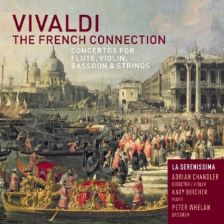
'The French Connection'
La Serenissima / Adrian Chandler
(Avie)
'Here the three solo instruments come and go in various combinations, always pleasing us and never outstaying their welcome. They are played with skill and taste, lapsing only when the bassoon overpowers the flute in the slow movement of RV438. The orchestral sound, as always with La Serenissima, achieves bright attractiveness and vivacity without feeling the need to pursue the taut energy of some other groups. And that’s just fine...' Read the review

Vespri Solenni per la Festa dell'Assunzione di Maria Vergine
Soloists, Concerto Italiano / Rinaldo Alessandrini
(Naïve Opus 111)
'No, not the "Vivaldi Vespers", nor even a reconstruction of a specific event, but a kind of "sacred concert" in Vespers form, of the sort that Venetian churches in Vivaldi’s time – ever aware of the power of music to swell a congregation – were wont to mount in the name of worship. Whether or not Vivaldi ever supplied all of the music for any such occasion is not clear – no complete integrated cycle exists – but he certainly set plenty of Vespers texts, enough at any rate for Rinaldo Alessandrini and scholar Frédéric Delaméa to put together this rich programme of delights...' Read the review

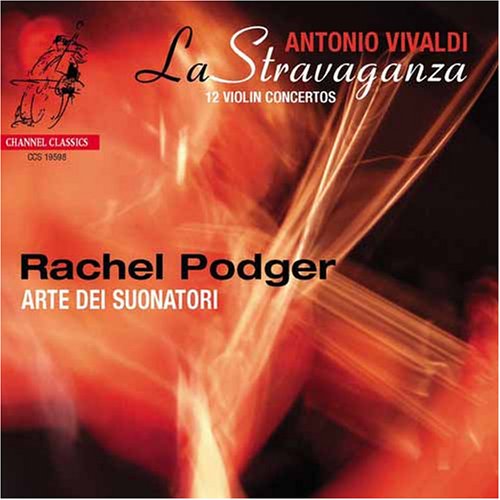
Violin Concertos, Op 4, La Stravaganza
Arte dei Suonatori / Rachel Podger vn
(Channel Classics)
'The performances by Rachel Podger are crackling with vitality and executed with consistent brilliance as well as a kind of relish in virtuosity that catches the showy spirit, the self-conscious extravagance, of this particular set of works. There are plenty of movements here where her sheer digital dexterity is astonishing – I might cite the finale of No 6, with its scurrying figures, the second movement of No 7 (the only four-movement concerto), the finale of No 2 with its repetitive figures and leaping arpeggios, the witty sallies in that of No 3, and the simple rapidity in No 11 – or indeed half a dozen others.' Read the review

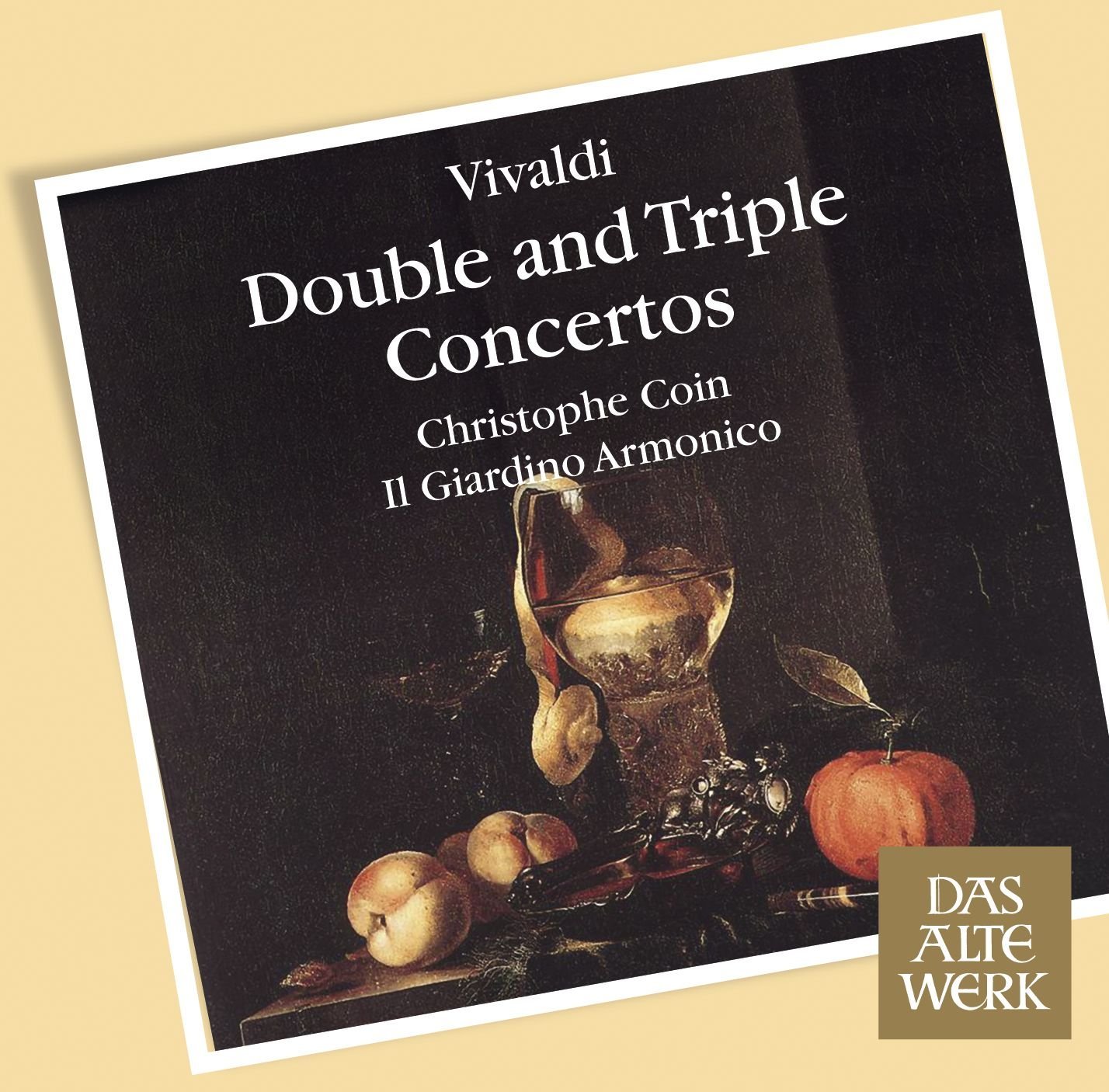
Il Proteo – Double and Triple Concertos
Christophe Coin vc Il Giardino Armonico
(Teldec)
'Playing of vitality and lyricism brings Vivaldi's music to life in a thrilling manner. Indeed, the integrity and musicianly character of these performances is in no small measure heightened by the presence of Christophe Coin. This new release is excellent in every respect: fine music, fine playing and a fine recording. An outstanding issue...' Read the review

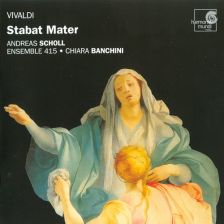
Stabat mater
Andreas Scholl; Ensemble 415 / Banchini
(Harmonia Mundi)
'Unlike settings of the Stabat mater by Pergolesi and some others, Vivaldi used only the first ten of the 20 stanzas of the poem. His deeply expressive setting of the poem will be familiar to many readers but few will have heard such an affecting performance as Scholl achieves here. The lyrical prayer of human yearning for faith contained in the “Fac ut ardeat” movement is most tenderly sung and here, as throughout the programme, sympathetically supported by the strings of Ensemble 415 under Chiara Banchini’s experienced direction.' Read the review

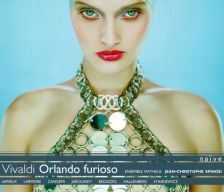
Orlando Furioso
Sols; Choeur Les Eléments & Ensemble Matheus / Jean-Christophe Spinosi
(Naïve)
'Like Handel a few years later in London, Vivaldi must have been inspired by the peculiarly intense situations experienced by Orlando and Alcina, and the score has a dramatic stature greater than most of his other operas – although if Opus 111 continue to produce revelations like this, I may be forced to eat my words. This is a magnificent achievement, and one of the pinnacles of Opus 111’s monumental Vivaldi Edition. If Vivaldi needed a champion to more firmly establish his credentials as a fully-fledged opera composer, then this recording is it.' Read the review

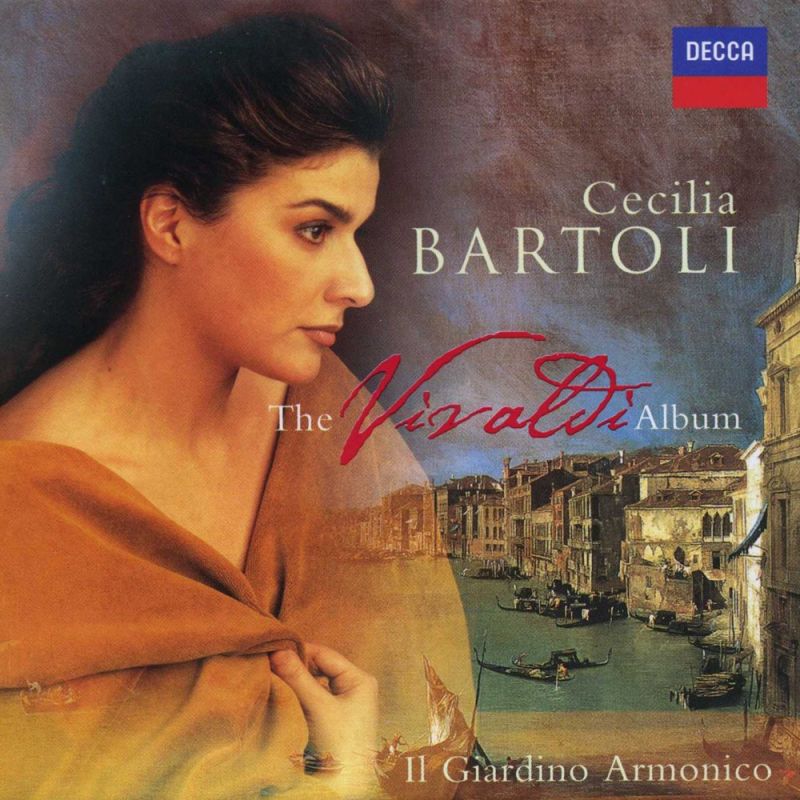
'The Vivaldi Album'
Cecilia Bartoli; Il Giardino Armonico
(Decca)
'Coarse-voiced period brass instruments herald Bartoli's riding of some particularly squally waves as tempest racks land and heart in 'Dopo un'orrida procella' from Griselda. The aria unleashes Bartoli's famous breathy, whispered coloratura, her flaming top register, and an enclosed, hollow chest-voice which seems to belong to neither of the other two...' Read the review

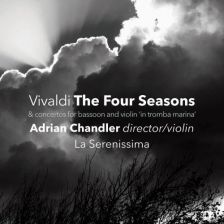
The Four Seasons
La Serenissima / Adrian Chandler vn
(Avie)
'The group’s founder and violinist/director Adrian Chandler is not only steeped in the musical language of Baroque Italy, both vocal and instrumental; he is also fully conversant with its humanist wellsprings. Vivaldi’s sonnets and consequent programmatic signposting throughout the score are thus filtered through a more nuanced rhetorical vision that is more stage than page. The result is an intensely dramatic account that will add new spice to what has for many listeners perhaps come to resemble a dreary domestic relationship. Take, for example, the spacious birdsong, surging waters and thumping rustic dances of "Spring"; the languid heat and raging storms finding echoes in the cuckoo’s urgent call and the goldfinch’s stratospheric sweetness in "Summer"; the drunkard’s erratic progress mirrored in the hunters’ ebullience and the hunted’s tragic flight in "Autumn"; and the elements’ implacable indifference in "Winter"...' Read the review

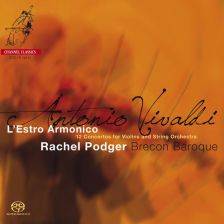
L'estro armonico
Brecon Baroque / Rachel Podger vn
(Channel Classics)
'What really shoots this recording straight to the top of the pile, however, is the sheer joy of it, the spontaneity and the tireless, surging musical energy of its many sudden feints and sallies. How grippingly, for instance, the tension climbs in the often rather polite first movement of No 4; how liltingly the off-beat theorbo strums add springy definition to the finale of No 5; and how invigoratingly the taught energy of those semiquavers in the No 3 finale finds release in a glorious chain of suspensions, and the witty interplay of the final bars spills over into a final-note twiddle that is pure natural exuberance...' Read the review

‘Concerti per flauto’
Maurice Steger rec/flautino I Barocchisti / Diego Fasolis
(Harmonia Mundi)
'As for the performances, there is not much to be said about Steger’s virtuosity other than that his dazzling fingerwork, varied articulation and colour seem to make him capable of anything he wants. What really makes this disc an outstanding one, however, is the way he creates an individual musical world for each concerto. Maybe that is to be expected in the descriptive ones, yet few others have matched his disturbingly spectral, lute-haunted La notte, and never have I heard a more pleasingly pastoral La pastorella, with its tasteful (yes, tasteful) additions of hurdy-gurdy, psaltery and, in the second movement, folk-style strings...' Read the review
Vivaldi: Le quattro stagioni & 3 Violin concertos (Giuliano Carmignola
VIVALDI / IL PRETE ROSSO
(1678-1741)
Giuliano Carmignola (Baroque Violin)
Venice Baroque Orchestra
Andrea Marcon (conductor)
https://www.youtube.com/watch?v=lA-qKtFGTbA&t=554s
Vivaldi: The Four Seasons & 3 Violin concertos (Giuliano Carmignola, Andrea Marcon)[37:20]
1. Concerto for Violin and Strings in E, Op.8, No.1, R.269 “La Primavera”
I. Allegro [3:19]
II. Largo [2:18]
III. Allegro [3:36]
2. Concerto for Violin and Strings in G minor, Op.8, No.2, R.315 “L'estate”
I. Allegro non molto [4:57]
II. Adagio [2:18]
III. Presto [2:15]
3. Concerto for Violin and Strings in F, Op.8, No.3, R.293 “L'autunno”
I. Allegro [4:34]
II. Adagio molto [3:21]
II. Allegro [2:49]
4. Concerto for Violin and Strings in F minor, Op.8, No.4, R.297 “L'inverno”
I. Allegro non molto [3:04]
II. Largo [1:47]
III. Allegro [2:39]
=========================================================
- The Four Seasons, version of the manuscript by Vivaldi -
Sauter à la navigationSauter à la recherch
(1678-1741)
==================================================
Giuliano Carmignola (Baroque Violin)
Venice Baroque Orchestra
Andrea Marcon (conductor)
https://www.youtube.com/watch?v=lA-qKtFGTbA&t=554s
Vivaldi: The Four Seasons & 3 Violin concertos (Giuliano Carmignola, Andrea Marcon)[37:20]
1. Concerto for Violin and Strings in E, Op.8, No.1, R.269 “La Primavera”
I. Allegro [3:19]
II. Largo [2:18]
III. Allegro [3:36]
2. Concerto for Violin and Strings in G minor, Op.8, No.2, R.315 “L'estate”
I. Allegro non molto [4:57]
II. Adagio [2:18]
III. Presto [2:15]
3. Concerto for Violin and Strings in F, Op.8, No.3, R.293 “L'autunno”
I. Allegro [4:34]
II. Adagio molto [3:21]
II. Allegro [2:49]
4. Concerto for Violin and Strings in F minor, Op.8, No.4, R.297 “L'inverno”
I. Allegro non molto [3:04]
II. Largo [1:47]
III. Allegro [2:39]
=========================================================
- The Four Seasons, version of the manuscript by Vivaldi -
Antonio Vivaldi's 12 violin concertos "Il cimento dell'armonia e dell'inventione" Op.8 of the collection that contains The Four Seasons as 4 concertos. In preparing this recording Giuliano Carmignola and Andrea Marcon has worked not from the familiar published edition of 1725 in Amsterdam but largely from manuscripts preserved in libraries in Turin, Dresden and Manchester.
The stylistic freedom (and technical difficulty) of these unpublished versions offer fascinating insights into Vivaldi's own working methods and reveal surprisingly differences to their printed counterparts.
In comparison with other extant versions, the Manchester Four Seasons display a freedom and spirit of harmonic experimentation which, for Carmignola and Marcon, provide the key to the works interpretation.
The published Amsterdam version contains less madness than the original versions. By performing the original versions we reveal a recklessness that is much closer to Vivaldi's own personality.
===========================================================
==============================================================
Les Quatre Saisons
https://fr.wikipedia.org/wiki/Les_Quatre_Saisons
Les Quatre Saisons (titre original italien : Le quattro stagioni) est le nom donné aux quatre concertos pour violon, composés par Antonio Vivaldi (1678-1741), Opus 8, no 1-4, qui ouvrent le recueil Il cimento dell'armonia e dell'invenzione — « La confrontation entre l'harmonie et l'invention ». L'opus 8 de Vivaldi a été édité en 1725 à Amsterdam par Michel Le Cène, mais il est admis que la composition de ces quatre concertos est antérieure de plusieurs années. L'œuvre connut un grand succès dans toute l'Europe notamment à Londres et à Paris où les concertos furent interprétés au début de l’année 1728 au Concert Spirituel.
Sommaire
- 1L'œuvre
- 2Concerto no 1 en mi majeur, op. 8, RV 269, « La primavera » (Le Printemps)
- 3Concerto no 2 en sol mineur, op. 8, RV 315, « L'estate » (L'Été)
- 4Concerto no 3 en fa majeur, op. 8, RV 293, « L'autunno » (L'Automne)
- 5Concerto no 4 en fa mineur, op. 8, RV 297, « L'inverno » (L'Hiver)
- 6Notes et références
- 7Voir aussi
L'œuvre[modifier | modifier le code]
Cette œuvre est l'une des plus connues du genre « concerto » (ici, violon soliste concertant avec un orchestre de chambre à cordes), et surtout, de la totalité des compositions de Vivaldi.
L'œuvre est accompagnée de quatre sonnets attribués à Vivaldi décrivant le déroulement des saisons. Sur la partition, le compositeur précise les correspondances avec les poèmes, explicitant même certains détails (aboiements de chien, noms d'oiseaux : coucou, tourterelle, pinson…)
En 2010, il en existe environ 1 000 versions différentes depuis le premier enregistrement, faisant état de divers arrangements (notamment en jazz) et transcriptions (piano, orgue, harpe, guitare, flûte, accordéon, synthétiseur pour les plus courantes), voire de recomposition complète comme celle de Max Richter en 2012. Certains violonistes, chefs d'orchestre, ou formations ont interprété et enregistré plusieurs fois cette œuvre depuis les années 1960 (Carmirelli, Accardo, Zukerman, Menuhin, Mutter, Sporcl, Kennedy, Karajan, Wallez, Scimone…). La palme revient à Jean-François Paillard qui l'a enregistrée six fois, et donnée 1480 fois en concert1.
La première interprétation publique, après le xviiie siècle, daterait de 1921 et le premier enregistrement de 1939 (Campoli, suivi en 1942 par Molinari). Mais il faudra attendre 1948 (Louis Kaufman dirigé par Henry Swoboda - grand prix du disque en 1950) pour que les Quatre Saisons soient réellement connues du public, avant de devenir une des œuvres les plus jouées au monde.
Concerto no 1 en mi majeur, op. 8, RV 269, « La primavera » (Le Printemps)[modifier | modifier le code]
| Le Printemps | |
| Allegro | |
| Largo | |
| Allegro | |
| Des difficultés à utiliser ces médias ? | |
|---|---|
| modifier |
- Allegro, en mi majeur, à quatre temps (4/4)
- Largo, en do dièse mineur, à trois temps (3/4)
- Allegro, en mi majeur, à quatre temps (12/8)
Allegro
Giunt'è la Primavera e festosetti La salutan gl'augei con lieto canto; E i fonti allo Spirar de'zeffiretti Con dolce mormorio Scorrono intanto. Vengon' coprendo l'aer di nero amanto E Lampi, e tuoni ad annunziarla eletti Indi tacendo questi, gli' Augelletti Tornan di nuovo al lor canoro incanto. Largo E quindi sul fiorito ameno prato Al caro mormorio di fronde e piante Dorme 'l Caprar col fido can a lato. Allegro Di pastoral Zampogna al suon festante Danzan Ninfe e Pastor nel tetto amato Di primavera all'apparir brillante. |
Allegro
Voici le Printemps, Que les oiseaux saluent d'un chant joyeux. Et les fontaines, au souffle des zéphyrs, Jaillissent en un doux murmure. Ils viennent, couvrant l'air d'un manteau noir, Le tonnerre et l'éclair messagers de l'orage. Enfin, le calme revenu, les oisillons Reprennent leur chant mélodieux. Largo Et sur le pré fleuri et tendre, Au doux murmure du feuillage et des herbes, Dort le chevrier, son chien fidèle à ses pieds. Allegro Au son festif de la musette Dansent les nymphes et les bergers, Sous le brillant firmament du printemps. |
Concerto no 2 en sol mineur, op. 8, RV 315, « L'estate » (L'Été)[modifier | modifier le code]
| L'Été | |
| Allegro non molto - Allegro | |
| Adagio - Presto - Adagio | |
| Presto | |
| Des difficultés à utiliser ces médias ? | |
|---|---|
| modifier |
- Allegro non molto - Allegro, en sol mineur à trois temps (3/8)
- Adagio - Presto - Adagio, en sol mineur à quatre temps (4/4)
- Presto, en sol mineur à trois temps (3/4)
Allegro non molto - Allegro
Sotto dura Staggion dal Sole accesa Langue l'huom, langue 'l gregge, ed arde il Pino; Scioglie il Cucco la Voce, e tosto intesa Canta la Tortorella e 'l gardelino. Zeffiro dolce Spira, mà contesa Muove Borea improviso al Suo vicino; E piange il Pastorel, perche sospesa Teme fiera borasca, e 'l suo destino; Adagio - Presto - Adagio Toglie alle membra lasse il Suo riposo Il timore de' Lampi, e tuoni fieri E de mosche, e mossoni il Stuol furioso! Presto Ah che pur troppo i Suo timor Son veri Tuona e fulmina il Ciel e grandioso Tronca il capo alle Spiche e a' grani alteri. |
Allegro non molto - Allegro
Sous la dure saison écrasée de soleil, Homme et troupeaux se languissent, et s'embrase le pin. Le coucou se fait entendre, et bientôt d'une seule voix Chantent la tourterelle et le chardonneret. Zéphyr souffle doucement, mais, tout à coup, Borée s'agite et cherche querelle à son voisin. Le pâtre s'afflige, car il craint L'orage furieux, et son destin. Adagio - Presto - Adagio À ses membres las, le repos est refusé : La crainte des éclairs et le fier tonnerre Et l'essaim furieux des mouches et des taons. Presto Ah, ses craintes n'étaient que trop vraies, Le ciel tonne et fulmine et la grêle Coupe les têtes des épis et des tiges. |
Concerto no 3 en fa majeur, op. 8, RV 293, « L'autunno » (L'Automne)[modifier | modifier le code]
| L'Automne | |
| Allegro | |
| Adagio molto | |
| Allegro | |
| Des difficultés à utiliser ces médias ? | |
|---|---|
| modifier |
- Allegro, en fa majeur à quatre temps (4/4)
- Adagio molto, en ré mineur à trois temps (3/4)
- Allegro, en fa majeur à trois temps (3/8)
Allegro
Celebra il Vilanel con balli e Canti Del felice raccolto il bel piacere E del liquor de Bacco accesi tanti Finiscono col Sonno il lor godere. Adagio molto Fa ch'ogn'uno tralasci e balli e canti L'aria che temperata dà piacere, E la Staggion ch' invita tanti e tanti D'un dolcissimo Sonno al bel godere. Allegro I cacciator alla nov'alba à caccia Con corni, Schioppi, e canni escono fuore Fugge la belua, e Seguono la traccia; Già Sbigottita, e lassa al gran rumore De' Schioppi e canni, ferita minaccia Languida di fuggir, mà oppressa muore. |
Allegro
Par des chants et par des danses, Le paysan célèbre l'heureuse récolte Et la liqueur de Bacchus Conclut la joie par le sommeil. Adagio molto Chacun délaisse chants et danses : L'air est léger à plaisir, Et la saison invite Au plaisir d'un doux sommeil. Allegro Le chasseur part pour la chasse à l'aube, Avec les cors, les fusils et les chiens. La bête fuit, et ils la suivent à la trace. Déjà emplie de frayeur, fatiguée par le fracas des armes Et des chiens, elle tente de fuir, Exténuée, mais meurt sous les coups. |
Concerto no 4 en fa mineur, op. 8, RV 297, « L'inverno » (L'Hiver)[modifier | modifier le code]
| L'Hiver | |
| Allegro non molto | |
| Largo | |
| Allegro | |
| Des difficultés à utiliser ces médias ? | |
|---|---|
| modifier |
- Allegro non molto en fa mineur à quatre temps (4/4)
- Largo, en mi bémol majeur à quatre temps (4/4)
- Allegro en fa mineur à trois temps (3/8)
Allegro non molto
Aggiacciato tremar trà nevi algenti Al Severo Spirar d'orrido Vento, Correr battendo i piedi ogni momento; E pel Soverchio gel batter i denti; Largo Passar al foco i di quieti e contenti Mentre la pioggia fuor bagna ben cento Allegro Caminar Sopra 'l giaccio, e à passo lento Per timor di cader gersene intenti; Gir forte Sdruzziolar, cader a terra Di nuove ir Sopra 'l giaccio e correr forte Sin ch'il giaccio si rompe, e si disserra; Sentir uscir dalle ferrate porte Sirocco Borea, e tutti i Venti in guerra Quest'è 'l verno, ma tal, che gioja apporte. |
Inscription à :
Articles (Atom)


![\version "2.18.2"
\header {
tagline = ##f
}
\score {
\new Staff \with {
}
<<
\relative c'' {
\tempo "Allegro"
\key e \major
\time 4/4
\partial 8 e8^\markup { \italic "Giunt’é la Primavera" } | gis8 gis gis fis16 e b'4. b16 a |
gis8 gis gis fis16 e b'4. b16 a | gis8 a16 b a8 gis fis8[dis b] }
>>
\layout {
#(layout-set-staff-size 18)
\override SpacingSpanner.common-shortest-duration = #(ly:make-moment 1/2)
\context { \Score \remove "Metronome_mark_engraver" }
}
\midi { }
}](https://upload.wikimedia.org/score/3/9/39z5f1rleocx1enk3hamgxzg2r171ap/39z5f1rl.png)