Archives du blog

mercredi 3 novembre 2021

Visits to Babylon: F. Scott Fitzgerald and Hollywood


Visits to Babylon: F. Scott Fitzgerald and Hollywood


In this feature from our Spring 1952 issue, we recall the great American novelist’s turbulent encounters with his country’s unappreciative movie industry.

24 September 2021

By Penelope Houston

Sight and Sound

F. Scott Fitzgerald
This feature first appeared in the Spring 1952 issue of Sight and Sound

During its first half-century, the relationship between the cinema and the novelist has been marked by unmistakable qualities of envy, of acerbity, of persistent, uneasy tension. The industry, with the swaggering assurance of the nouveau-riche, pays handsomely for talent or material which it has scarcely troubled to learn how to use. Aldous Huxley is set to work on Pride and Prejudice, Faulkner to cut Hemingway to the pattern of a wartime novelette; Hecht adapts Wuthering Heights and Isherwood makes an Ava Gardner vehicle out of Dostoievsky. Writers see their own work mutilated to meet box-office fashions or censorship taboos.

Literary critics – like drama critics, who tend to survey the stage appearances of film stars with the weary condescension previously reserved for performing animals – treat the cinema as a road to damnation. Novelists who have been press-ganged into the alien service take their money and leave, sometimes to avenge themselves with pictures of a Hollywood matching Renaissance opulence with a Borgia talent for intrigue and deception .

At bottom, perhaps, the problem is more serious: Scott Fitzgerald wrote in The Crack-Up:

“I saw that the novel, which at my maturity was the strongest and supplest medium for conveying thought and emotion from one human being to another, was becoming subordinated to a mechanical and communal art that, whether in the hands of Hollywood merchants or Russian idealists, was capable of reflecting only the tritest thought, the most obvious emotion. It was an art in which words were subordinated to images, where personality was worn down to the inevitable low gear of collaboration.

”As long past as 1930, I had a hunch that the talkies would make even the best-selling novelist as archaic as silent pictures… there was a rankling indignity… in seeing the power of the written word subordinated to another power, a more glittering, a grosser power. The advance of the communal art may be inevitable; it is also as alarming as any revolutionary process, and the novelist may choose to see himself as the last defendant of the old order. Yet the attraction of the industry is not only in the price it pays: power itself fascinates.”

Scott Fitzgerald’s own career shows the interaction with the cinema that has become almost a pattern for the successful novelist. Hollywood bought his works, and did its worst with them. Fitzgerald made two abortive visits as a scriptwriter and then, at the time when his popular reputation was at its lowest, when the critics had attacked Tender is the Night and he had documented the history of his own collapse in The Crack-Up, he went to Hollywood again. His unfinished novel, The Last Tycoon, may be taken to sum up what he felt: the old, powerful fascination of the medium, the disillusioning experience of strategy and compromise, the sense of waste and corruption and of vast, partly realised possibilities. In a nation that “for a decade had wanted only to be entertained” the pull of Hollywood, however it might deflect a writer from his true course, was not to be resisted.

The Beautiful and Damned (1922)

Gatsby in Hollywood

ln the early 20s Scott Fitzgerald, on the strength of a single adolescent novel which seemed to catch the mood of a generation, achieved that fantastic, irrational popular success typical of a decade of wild enthusiasms. His short stories were bought, inevitably, by the plot-hungry cinema – three were filmed between 1920 and 1922. His second novel, The Beautiful and Damned, was filmed by Warners in the year of publication, with Marie Prevost and Kenneth Harlan as the ill-fated, if scarcely tragic, Gloria and Anthony. Photoplay commented:

“If he depicts life as a series of petting parties, cocktails, mad dancing and liquor on the hip it is because he sees our youthful generation in these terms… it is our youthful fascisti possessing the measure of money and knowledge, fighting against the swing of the pendulum which has brought us the you-must-not era.”

Fitzgerald, in Echoes of the Jazz Age, said of the films of the 20s:

“The social attitude of the producers was timid, behind the times and banal- for example, no picture mirrored even faintly the younger generation until 1923… there were a few feeble splutters and then Clara Bow in Flaming Youth; promptly the Hollywood hacks ran the theme into its cinematographic grave.”

The screen versions of his own stories were probably among the more feeble of the splutters.

The Great Gatsby (1926)

The Great Gatsby was first produced by Paramount in 1926, directed by Herbert Brenon, with Lois Wilson as Paisy, Warner Baxter as Gatsby, Neil Hamilton as Tom Buchanan and William Powell as Wilson. The general tone of the film may perhaps be imagined from comments in the trade press; there was some disapproval of a scene showing Daisy drunk on her wedding day, and the Kinematograph Weekly complained that “all the characters are morally unsound”. It summed up the plot as a story of “How one man’s failure brought happiness to two others” – Tom and Daisy, in other words, came out all right.

After this, the cinema ignored Fitzgerald for more than 20 years: M.G.M. acquired the rights of Tender is the Night, but after Irving Thalberg’s death Fitzgerald wrote to a friend “I think that he killed the idea of either (Miriam) Hopkins or Fredric March doing” the novel. As late as 1949, however, perhaps because of the fashion for screen psychiatry, M.G.M. were dickering with the idea of filming this fascinating but, one feels, almost untranslatable book. The title appeared in a production schedule, and that was all.

In the same year Paramount resurrected Gatsby, directed by Elliott Nugent from a script by Richard Maibaum and Cyril Hume (the latter a Tarzan screen writer, among other credits). This was the occasion for a quite remarkable accumulation of imaginative disasters, of which the most striking was the casting of Alan Ladd as Jay Gatsby. The essence of Gatsby is his capacity for wonder, his overpowering imaginative audacity in the service of “a vast, vulgar and meretricious beauty”; the incorruptible dream, expressed in make-believe luxury and built on a lurid foundation of corruption, points the contrast to the alluring, shallow, vicious world of the Buchanans. The screen’s favourite impassive gunman could be expected to suggest nothing of this. Betty Field, more subtly miscast, played Daisy with sensitivity but a somehow rather too consciously worked out sense of the period; Barry Sullivan was an anonymous Buchanan; Macdonald Carey a half-hearted Nick Carraway, and Shelley Winters a too strident Myrtle Wilson.

But the film, with its March of Time style introduction to the 20s, with flashbacks breaking up the whole balance and compression of the novel, missed all its chances. Even the visual symbols – Gatsby’s disorganised, dream-like parties in his Xanadu fantasy of a palace, the waste land round Wilson’s garage, the sticky summer heat in the New York apartments, the green light shining from the Buchanan’s dock – were fumbled and lost. The tone, although rather truer to the original than one imagines the 1926 version to have been, was weakened by a final orgy of repentance; Daisy repents and tries to warn Gatsby; Jordan Baker, whose activities have been extended from cheating in a golf match to chiselling a car out of Gatsby, repents; unforgiveable, Gatsby repents. His last speech strings together the tired cliches of the gangster hero: he is going to “take this rap for the sake of boys like Jimmy Gatz” – so much for the incorruptible dream.

In spite of everything, the film had that curious air of flawed distinction, apparent in the occasional attitude to a character, in stray lines of dialogue (not Gatsby’s famous “her voice is full of money” which, typically, was omitted) that identify the source however faltering the adaptation. Paramount shot their bolt too soon. They are not likely to film Fitzgerald’s wonderfully sharp, controlled, evocative novel again for some time, but, after A Place in the Sun, one feels that in George Stevens they might have the director to do it.

“A crowd of fakes and hacks”

Scott Fitzgerald’s own Hollywood career began in 1927, when he went out under contract to United Artists to do “a fine modern college story” for Constance Talmadge. The result, Lipstick, was never made; Arthur Mizener, in The Far Side of Paradise, calls it “a competently plotted if conventional story about a girl at a prom”. Later, with his characteristic mixture of apparent naive conceit and disconcerting self-knowledge, Fitzgerald wrote:

“I had been generally acknowledged for several years as the top American writer both seriously and, as far as prices went, popularly… I honestly believed that with no effort on my part I was a sort of magician with words… Total result – a great time and no work. I was to be paid only a small amount unless they made my picture – they didn’t.”

Red Headed Woman (1932)

In 1931 he did some work for M.G.M. on a film called Red Headed Woman; this was made, with Jean Harlow, Chester Morris and Charles Boyer; the script credit went to Anita Loos. Fitzgerald had worked under difficulties and was dissatisfied. “I left with the money but disillusioned and disgusted, vowing never to go back, tho’ they said it wasn’t my fault and asked me to stay.”

He did go back however, in 1937. It may be taken as almost axiomatic that the cinema does not attract a novelist at the height of his powers (there is a revealing little scene in The Last Tycoon when Stahr explains, “we don’t have good writers out here… we hire them, but when they get out here they’re not good writers”) and Fitzgerald in 1937 was in debt, out of fashion, and worn out. At the same time his hopes, as usual, were high, and were characteristically expressed in a letter to his daughter:

“The third Hollywood venture. Two failures behind me though one no fault of mine… I want to profit by these two experiences! must be very tactful, but keep my hand on the wheel from the start – find out the key man among the bosses and the most malleable among the collaborators – then fight the rest tooth and nail until, in fact or in effect, I’m alone on the picture. That’s the only way I can do my best work. Given a break I can make them double this contract in two years.”

But a little later he said of Hollywood:

“A strange conglomeration of a few excellent, over-tired men making the pictures and as dismal a crowd of fakes and hacks at the bottom as you can imagine.”

Three Comrades (1938)

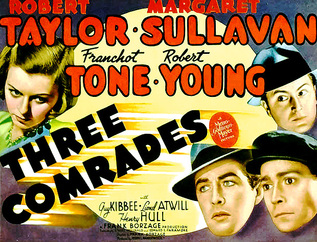
In any case, if the journey to Hollywood was a retreat, it was a determined, combative retreat. Fitzgerald’s first and last screen credit was for Three Comrades, made by M.G.M. (to whom he was under contract) and directed by Frank Borzage. This was the sort of high-class tear-jerker, as artificial in its own way as the crazy comedies, that almost died out with the 30s: social significance has partly replaced the luxury of manufactured emotion. The Comrades, three young German soldiers in the first war, go into the garage business together; one (Robert Young) engages in some rather vague political activity and is killed; another (Robert Taylor) falls in love with a tubercular girl (Margaret Sullavan, adept in wistful pathos), who dies as slowly and as theatrically as Camille.

It is peculiarly difficult to apportion credit for this script: there is the novel, there is the co-script writer, Edward Paramore, an old hand, and there is the producer, Joseph Mankiewicz. Fitzgerald wrote bitterly to him:

“To say I’m disillusioned is putting it mildly. I had an entirely different conception of you. For 19 years… I’ve written best selling entertainment and my dialogue is supposedly right up at the top. But I learn from the script that you’ve suddenly decided that it isn’t good dialogue and you can take a few hours off and do much better… Oh, Joe, can’t producers ever be wrong? I’m a good writer – honest. I thought you were going to play fair.”

The emphasis on “best selling” is a part of Fitzgerald’s oddly divided attitude to his own work. But one wonders how many letters like this have been written during Hollywood’s first 40 years.

If it is impossible to guess how much of Fitzgerald the film holds, at least the temper and mood are not altogether alien to him. The doomed heroine, sentimentalised though she is, seems a blurred version of a Fitzgerald girl; the note of controlled, compassionate despair appears at moments almost incongruously authentic.

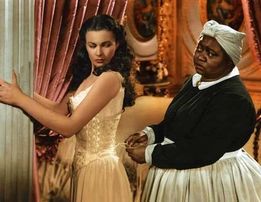
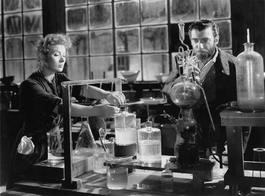
After this, Fitzgerald never again achieved that sine qua non, a screen credit. M.G.M. employed him on a Joan Crawford picture, Infidelity, which, in spite of some amused comment on the star’s limited emotional range, he apparently found interesting: it was shelved because of censorship difficulties. Arthur Mizener names the films on which, on and off, he did some work: A Yank at Oxford, The Women, Madame Curie, Gone with the Wind, Raffles. M.G.M. dropped his contract after taking up the first option. They had used him, as one might expect, on “big” pictures, but rather as an odd job man, called in to tinker with a script, than as a creative writer. Bad luck, bad judgment, Fitzgerald’s own temperament and state of health, must have been to blame for this abortive career. But Hollywood traditionally breaks its writers by indifference, and the system does not encourage the fitting of the individual to the subject he can best handle.

Winter Carnival (1939)

The most notorious episode in Fitzgerald’s screen writing career is that used by Budd Schulberg in his novel The Disenchanted. Schulberg, then a young script writer, and Fitzgerald were despatched by Walter Wanger to a college weekend which was to figure in a musical, Winter Carnival. Schulberg’s story gives a bitter, tragic picture of the writer, employed solely for the cachet which his presence is supposed to give the producer in college circles, wandering drunkenly, incoherently around, extemporising fragments of an impossible script, shepherded and pitied by his rather reproving, governess-like young collaborator, until the producer finally packs him off to New York.

In 1940, Fitzgerald found a more attractive job. Lester Cowan bought one of his short stories, Babylon Revisited, and Fitzgerald was employed on the script. The story, of a jazz age expatriate’s return to Paris, his efforts to recover his daughter from a sister-in-law who blames him for his wife’s death, the destruction of his hopes, casually and completely, by two survivors from the past, is, in its acute and agonising sense of despair and regret, one of Fitzgerald’s finest. He said that his work on the script was “more fun than I’ve ever had in pictures”. The film was to be called Cosmopolitan. But Shirley Temple was wanted for the child’s part, was not available, and the plan was shelved. Since then Fitzgerald’s script has apparently been considered for publication, and a few months ago the Motion Picture Herald reported that Paramount had bought the rights of Babylon Revisited. One must assume that Fitzgerald’s own script will never reach the screen. It was almost his last job as a screen writer.

A Stahr is born

To accuse Hollywood of wasting Fitzgerald would be foolish; his strong visual sense, his superb dialogue, his undoubted interest in the mechanics of the film, suggest that he might have been employed to better purpose. But the facts of the case may have been more complicated. Instead, he turned to a novel, The Last Tycoon, strangely and impressively free from that angry resentment which runs through so much Hollywood fiction, from Nathanael West to Huxley. Previously – he had a taste for the histrionic – he had approached the cinema in short stories, through characters in the novels: here he tried to come to terms with the whole mystique of Hollywood.

In 1922, a character in The Beautiful and Damned, the enigmatic vulgarian film producer, Bloeckman, who effects the final humiliation of both Gloria and Anthony, symbolised the strange new forces of big business. In Tender is the Night it is through the resilient; hopeful young actress, Rosemary, “catapulted by her mother on to the uncharted heights of Hollywood” that we are introduced to the enchanted, exhausted, decaying world of the Divers. Rosemary herself, one feels, will be subject to a cruder corruption.

Fitzgerald approached the centre more nearly in a short story, Crazy Sunday, written after his second Hollywood visit. The unreality, the suspicion and self-destruction of Hollywood people are caught with the precision and tension that marks all his best writing. In the director who “meshed in an industry, paid with his ruined nerves for having no resilience, no healthy cynicism, no refuge”, there is an indication of the price which, he believed, Hollywood demands of those who resist its conditions.

Edmund Wilson says of California, “all visitors from the East know the strange spell of unreality which seems to make human experience on the Coast as hollow as the life of a troll-nest where everything is out in the open instead of being underground”. The typical Hollywood novel has that unreality – for the writer, Hollywood has proved only a precarious substitute for the real world. The standard hero is the disillusioned novelist himself, examining with horrified amazement the stages of his escape from the lures and betrayals of California. Fitzgerald, however, chose to write not as an exile or a tourist but from within. His narrator, the producer’s daughter, belongs to the first generation that could grow up with the industry, and her viewpoint is made explicit: “I accepted Hollywood with the resignation of a ghost assigned to a haunted house. I knew what you were supposed to think about it, but I was obstinately unhorrified.” The approach is echoed in the tone and pitch of the writing; the intimate, conversational style handled so flexibly that it retains an objective detachment, a wide angle of vision.

Irving Thalberg

The novel has a particular context and perspective. Stahr is based on one of Hollywood’s almost legendary heroes, the late Irving Thalberg. Thalberg, who died in 1936, was in charge of production at M.G.M. (the position now held by Dore Schary); he is credited with that power of organisation, care for detail, and knowledge of when to spend money, allied to a taste for quality, that make the great impresario. Concerned as he was with the locus of power in Hollywood, Fitzgerald felt that it had shifted away from the director. ln his notes he wrote of Stahr:

“His relation with the directors, his importance in that he brought interference with their work to a minimum, and while he made enemies – and this is important – up to his arrival the director had been King Pin in pictures since Griffith made The Birth of a Nation… When he interfered, it was always from his own point of view, not from theirs. Thus his function was different from that of Griffith in the early days, who had been all things to every finished frame of film.”

Stahr’s authority, all powerful in the world he has made, dominates the novel. Self-made and semi-educated, his understanding of pictures instinctive rather than technical, he provides a directed, unifying control. Fitzgerald pays particular attention to his relations with writers; there is the scene in which he explains to the disillusioned English writer, Boxley – who represents the characteristic intellectual condemnation of an art so hedged about by conditions and compromises – that to make pictures one must learn and respect their language. Stahr’s own conception of his function has a naive, illuminating grandeur. “I never thought I had more brains than a writer has. But I always thought that his brains belonged to me – because I knew how to use them. Like the Romans – I’ve heard that they never invented things, but they knew what to do with them. “

Money is never far from the forefront of his world, and Stahr holds his ground because he has persuaded the money men to a temporary acceptance of his dictatorship. There is a specifically Hollywood idealism in the scene in which Stahr rocks the deepest convictions of the financiers by his plan to make a film that is bound to lose money. He has “moved pictures sharply forward through a decade, to a point where the content of the ‘A productions’ was wider and richer than that of the stage”. His responsiveness appears in the curious incident of the Black man, coming down to the beach to read Emerson, who, by his casual rejection of the movies, persuades Stahr to reconsider his whole production schedule.

Stahr himself cannot survive and Fitzgerald – writing in 1940 – saw his novel as “an escape into a lavish, romantic past that perhaps will not come again into our time”. The industry has grown too complex for the role of the paternalistic employer, with his intense faith in personal relationships and his understanding both of the financial strategy and of the picture itself. Stahr’s dream, like Gatsby’s, belongs in the past. Fitzgerald died with the novel only half-written, but Stahr’s defeat was to be brought about at the hands of the ruthless financier Brady, who neither knows nor cares about the making of films. Defeat comes to Stahr from within, in the loss of his health and control, and from both sides: Brady and his confederates are able to ally themselves with the unions. Stahr, the last tycoon, falls before the increasingly mechanistic, inhuman development of the industry.

His benevolent tyranny is exercised in a world not customarily taken seriously. But the power of Hollywood is a fact, and the novel, accepting it as such and alive to the possibilities and dangers, compels consideration of its nature. Fitzgerald’s dying, solitary, tragic hero is placed at the centre of an authentic battlefield

Stahr, by character and by circumstances, is majestically isolated. Around him are the down and out producers, second-rate writers, has-been stars still searching for their vanished glory, cut-throat business men who retain the standards of the circus tent, sycophants and swindlers. The moral atmosphere is one of corruption and a tired, jaded indifference. Only the financiers and the technicians habitually know where they are going, and an occasional Stahr, able to set in motion, to direct, to “care for all of them”.

This is the Hollywood with which Fitzgerald leaves us. His experiences of it are worth documenting because Scott Fitzgerald, sharing as he did that heightened awareness and responsiveness which he gave to Gatsby, could perhaps express more acutely than others the simultaneous attraction and repulsion that the novelist is likely to feel. The achievement of Hollywood is a fait accompli; an industrial civilisation’s inordinate demand for entertainment has been met; barriers of taste have been shattered to impose a new democracy: in the sight of the film, all audiences are equal. The cost has been enormous in waste, in misdirected energy, in the fatal attraction the cinema holds for the second-rate. The novelist wants at once to get his hands on the new medium and to rebuild the barriers. All this Fitzgerald sensed and recorded. In The Last Tycoon, in Stahr’s persuasion of Boxley, he perhaps found his own solution.

Further reading

The third Gatsby

As Baz Luhrmann's Jazz Age spectacular The Great Gatsby hits cinemas, we go behind the scenes on Jack Clayton's 1974 version of F. Scott Fitzgerald's classic novel.By Carolyne Bevan

================

He came, he saw, he most certainly did not conquer. The great novelist arrived in Los Angeles in the '20s and bombed over and over as a screenwriter. As it happens, he also spent a lot of time getting bombed. On the eve of Baz Luhrmann's ''The Great Gatsby,'' we revisit a famously tortured time in the life of a legend.

ADVERTISEMENT

F. Scott Fitzgerald is one of the most celebrated novelists of all time, but his days writing and rewriting screenplays — including the one for Gone With the Wind — were far less fruitful. As an acquaintance of his, Some Like It Hot director Billy Wilder, once said, ”He made me think of a great sculptor who was hired to do a plumbing job. He did not know how to connect the f—ing pipes.”

Wilder’s view is shared by director Baz Luhrmann, though he prefers a different analogy. ”You put a brilliant dancer — a superstar — in the chorus, and they stick out,” he says. ”They’re hopeless, terrible. They can’t do it.” Luhrmann knows what he’s talking about, Fitzgerald-wise. On May 10, Warner Bros. will release the fourth big-screen adaptation of Fitzgerald’s classic novel The Great Gatsby. The 3-D film is directed and co-written by Luhrmann and stars Leonardo DiCaprio as the title character, a mysterious millionaire who attempts to lure his now-married ex-girlfriend Daisy (Carey Mulligan) back into his life by hosting lavish parties at a Long Island mansion. If the film’s a hit, it will be a rare happy chapter in the story of Fitzgerald and Hollywood — a tale marked mostly by disappointment and disaster.

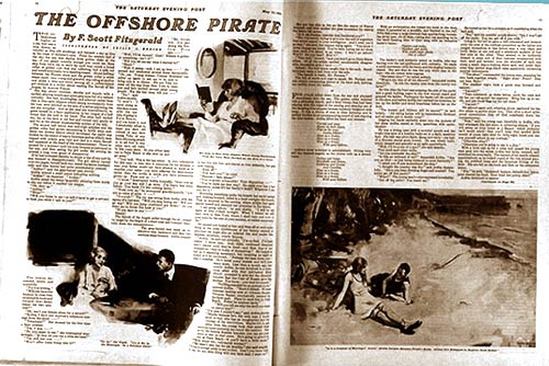
Fitzgerald, who was born in St. Paul in 1896, loved the movies. ”He was there almost at the infancy of the industry,” says James L.W. West III, professor of English at Penn State and a Fitzgerald scholar whom Luhrmann used as a historical expert on his film. ”He wrote stories about Hollywood and was very interested in the possibilities of cinema.” Shortly after the career-making 1920 publication of his debut novel, This Side of Paradise, the author revealed in an interview that he was a fan of Charlie Chaplin while admitting it might be a problem to ”mold my stuff into the conventional movie form with its creaky mid-Victorian sugar.” However, in the early ’20s, Fitzgerald’s short stories ”Head and Shoulders” and ”The Offshore Pirate” were adapted for the screen, as was his second novel, 1922’s The Beautiful and Damned.

Fitzgerald published The Great Gatsby in 1925, and though the book didn’t sell nearly as well as its predecessors, an adaptation hit theaters in 1926. The next year, the author and his wife, Zelda, headed for Hollywood so he could write an original screenplay called Lipstick for the studio First National. The company subsequently canceled the project, but the famously hard-partying couple left an impression during their stay in L.A., on one occasion gathering together all the purses they could find at a party and cooking them in tomato sauce. Four years later, Fitzgerald was back to adapt another author’s novel for MGM. This time, he was desperate for cash and alone, the troubled Zelda having been hospitalized following a nervous breakdown. The writer caused another scene at a party, drunkenly crooning a song about a dog at an event held at the house of MGM boss Irving Thalberg. He was fired a week later.

In 1937 Fitzgerald returned to L.A. yet again after a director friend persuaded MGM to offer him another contract. His fourth novel, 1934’s Tender Is the Night, had flopped, and the author was largely forgotten and deeply in debt with bills piling up for Zelda’s treatment and their daughter Scottie’s education. ”The first time I saw Scott he was in the commissary sitting alone at a table,” It’s a Wonderful Life screenwriter Frances Goodrich would later tell Aaron Latham, author of the 1971 book Crazy Sundays: F. Scott Fitzgerald in Hollywood*. ”He looked as if he were seeing hell opening up before him. I never forgot that tormented face.”

Fitzgerald faced torments aplenty during his third sojourn in the dream factory. He received his sole screenwriting credit on 1938’s Three Comrades, a film extensively rewritten by producer Joseph L. Mankiewicz (whom the author privately referred to as ”Monkeybitch”). Fitzgerald spent the rest of his time sweating away on projects that never arrived on the screen — including a proposed Joan Crawford vehicle called Infidelity — or for which he failed to receive a credit, such as Gone With the Wind. He recalled toiling on GWTW as a particularly bizarre experience given producer David O. Selznick’s insistence that any dialogue he added should come from Margaret Mitchell’s original potboiler. ”One had to thumb through as if it were Scripture,” Fitzgerald later wrote, ”and check out phrases of hers which would cover the situation!”

Fitzgerald’s lack of success failed to correct the assumption among many that this faded Jazz Age icon had passed away. One day a producer named Walter Wanger called the young writer Budd Schulberg into his office and asked how he would feel about Fitzgerald helping him on his screenplay Winter Carnival. ”Isn’t Scott Fitzgerald dead?” Schulberg asked. ”On the contrary,” replied the producer, ”he’s in the next office reading your script.” Fitzgerald was fired from the film after he turned an East Coast research trip with his new collaborator into an extended drinking bender. He hoped to weave gold out of his Hollywood experiences in the form of a novel, The Last Tycoon, about a Thalbergesque studio chief. Alas, in December 1940, he died of a heart attack, with The Last Tycoon unfinished and his Hollywood dreams unfulfilled.

It’s been 39 years since Jay Gatsby last sauntered across movie screens, in a Robert Redford-starring adaptation that New York Times reviewer Vincent Canby found ”as lifeless as a body that’s been too long at the bottom of a swimming pool.” Professor West argues that screenwriters have been ”hypnotized” by the writer’s prose with negative results: ”It doesn’t seem to live on the screen in quite the same way.” Luhrmann and his co-screenwriter Craig Pearce have stayed true to the book in many ways, but theirs is a far more visually energetic affair than previous adaptations and is certainly the first to boast a hip-hop-fueled soundtrack overseen by Jay-Z. ”I have tried to be not so much faithful to a revered text,” says Luhrmann, ”but to reproduce what it felt like to read a book of incredible immediacy in 1925.”

Five days after its U.S. release, Luhrmann’s Gatsby will open the Cannes Film Festival. That in itself qualifies as something of a happy ending for the sorry tale of Fitzgerald’s relationship with the movies, albeit one with a bleak twist. The peripatetic author actually wrote part of The Great Gatsby on the French Riviera not far from where the film will be screened, while a neglected Zelda embarked on a flirtation with a young French pilot, which many believe turned sexual. ”The ‘happy ending’ is that the film, I hope, comes to life in 3-D on the very beach where his wife was having an affair,” says Luhrmann. ”I don’t know what to make of that, except: Isn’t the circle of life a funny thing?” Funny. And appropriately Fitzgeraldian.

*An earlier version of this article inadvertently left off the full title of Latham’s novel.

===============

Écrivains à Hollywood : F. Scott Fitzgerald, le magnifique

Publié 

Écrivains à Hollywood : F. Scott Fitzgerald, le magnifique

Figure majeure du XXe siècle, F. Scott Fitzgerald a marqué son époque, en peignant un portrait à la fois ciselé et audacieux des contemporains de son temps. En 1940, malade, rongé par l’alcoolisme et la dépression, le chef de file de la Génération perdue tire sa révérence, en laissant derrière lui l’empreinte d’un artiste qui aura contribué à changer le visage de la littérature américaine.

Deux ans auparavant, il signe l’unique scénario de sa carrière : Trois camarades, mélodrame prégnant que Frank Borzage met en scène, confiant les rôles principaux à Robert Taylor, Margaret Sullavan et Franchot Tone. À l’occasion de la sélection de cette pépite dans la collection Écrivains à Hollywood des Trésors Warner, retour sur la brève mais intense incursion de F. Scott Fitzgerald dans le monde du Septième Art.

Tandis que l’œuvre de F. Scott Fitzgerald a fait l’objet de nombreuses adaptations cinématographiques depuis les années 1920 – à l’instar d’Herbert Brenon, qui réalise la première des six adaptations de Gatsby le Magnifique, au lendemain de la publication du roman culte – l’écrivain a attendu d’être au crépuscule de sa carrière pour s’essayer au cinéma. Après s’être illustré pendant deux décennies en signant une bibliographie riche de nombreux romans, essais, poèmes, pièces et recueils qui ont bousculé les codes de la littérature classique, Fitzgerald était très courtisé à Hollywood.

Mis à part un premier scénario pour le court métrage dramatique Pusher-in-the-Face, qu’il écrit de façon quasi-confidentielle à la fin des Roaring Twenties, F. Scott Fitzgerald s’est toujours tenu à bonne distance d’une industrie du divertissement envers laquelle il était méfiant. Une dizaine d’années après ce premier coup d’essai, l’homme de lettres revoit son jugement, pour donner vie à une histoire dont la mélancolie fait écho à son propre vécu. Sous sa plume, le scénario de Trois camarades (1938) se dote d’une intrigue à la profondeur saisissante.

Au sortir de la Première Guerre mondiale, trois soldats allemands, qui se sont liés d’amitié en combattant côte-à-côte sur le champ de bataille, s’associent pour gérer un garage automobile. Un jour, une cliente fortunée, franchit la porte de leur garage… Commence alors le début d’une nouvelle amitié pour la joyeuse bande qui devient vite inséparable. Toutefois, alors que l’ombre d’un second conflit mondial plane déjà sur leur vie, les quatre compères vont voir leurs rêves de bonheur voler en éclat.

Ayant rejoint les rangs de l’armée américaine dès 1917, en tant que sous-Lieutenant à Camp Sheridant, F. Scott Fitzgerald a mis beaucoup de lui-même dans le scénario de ce film, qui dresse un pont entre les deux périodes les plus sombres du siècle dernier et qui sort au cinéma l’année précédant l’invasion de la Pologne par les troupes d’Hitler. Un drame à la portée historique prégnante, filmé à hauteur d’homme. Immanquable.

Pour rappel, la collection Écrivains à Hollywood est disponible actuellement en édition DVD et exclusivement sur le portail officiel de la boutique Warner !

=================


Zelda et Scottie Fitzgerald vont à Hollywood


Scott (et Zelda et Scottie) Fitzgerald vont à Hollywood

Photo
Photo

F. Scott Fitzgerald et Hollywood

Les deux images ci-dessus marquent la première et la dernière étape du séjour de Scott Fitzgerald à Hollywood en tant que scénariste.
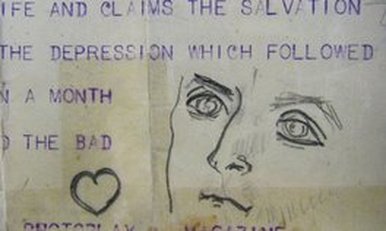
La première image est une section d'un télégramme froissé, contenant un croquis de l'auteur (et un cœur) par sa femme, Zelda. Le télégramme a été envoyé à Scott par le rédacteur en chef du magazine Photoplay en janvier 1927, environ un an après la publication de The Great Gatsby . les années 1920. À cette époque, Fitzgerald était au sommet de sa gloire, gagnant de grosses sommes d'argent pour ses nouvelles. Le télégramme lui est parvenu à Hollywood, où il travaillait sur le scénario de Lipstick, destiné à être un film sur les clapets, une catégorie célèbre et flamboyante incarnée par Zelda. De façon inquiétante, le script n'a jamais été terminé, le film n'a jamais été réalisé.
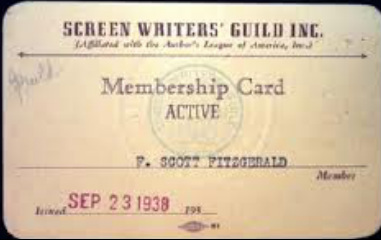
La deuxième image, un peu plus d'une décennie plus tard, représente la troisième et dernière étape de la carrière de scénariste de Fitzgerald à Hollywood. À présent, sa renommée littéraire avait reculé, son travail était démodé et il manquait désespérément d'argent pour payer sa consommation d'alcool, l'entretien de sa fille et l'institutionnalisation de Zelda. La mort n'était que dans quelques mois.
Photo
Scott a vendu plusieurs de ses premières nouvelles à des magazines populaires. Il a également vendu les droits cinématographiques de quelques histoires à Hollywood.
Photo
Ce film de 1921 était l'un de ces films tirés d'une nouvelle de Fitzgerald.

Scott Fitzgerald et le cinéma

Photo
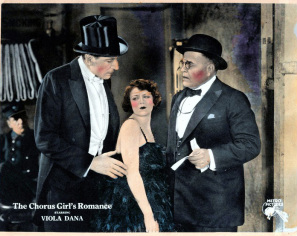
"Chorus Girl's Romance" - basé sur une histoire de Fitzgerald.
"Je déteste l'endroit [Hollywood] comme un poison avec une haine sincère", écrivait Fitzgerald à son agent en 1935. Depuis la résurrection de la réputation littéraire de Fitzgerald au cours des deux ou trois dernières décennies, sa relation avec Hollywood a généralement été décrite comme celle de un génie littéraire tourmenté, ayant besoin d'argent et donc contraint de gaspiller ses talents à écrire des scénarios dans une ville qu'il méprisait pour une bande de philistins incapables de reconnaître ses talents remarquables. Ce refus de reconnaître ses dons, selon ce scénario, a contribué à détruire cette icône sensible de la littérature américaine du 20e siècle.
Fitzgerald lui-même a parfois promu ce mythe d'un auteur dont les talents n'étaient pas appréciés par les producteurs de studio hollywoodiens cyniques, grossiers et avides d'argent. En 1936, il écrivit que le cinéma était un « art mécanique et communautaire qui... n'était capable de refléter que la pensée la plus banale, l'émotion la plus évidente... un art dans lequel les mots étaient subordonnés aux images, où la personnalité était usée jusqu'au inévitablement bas engrenage de collaboration..... Il y avait une indignité de rang, qui était devenue pour moi presque une obsession, à voir le pouvoir de l'écrit subordonné à un autre pouvoir, un pouvoir plus éclatant, un pouvoir plus grossier..." Il a affirmé que ses trois séjours à Hollywood s'étaient soldés par un échec parce qu'il ne pouvait accepter la nécessité d'une collaboration sur les scripts et que, contrairement à ses collègues scénaristes, il n'était pas un hacker et ne produirait pas de scripts sur commande.

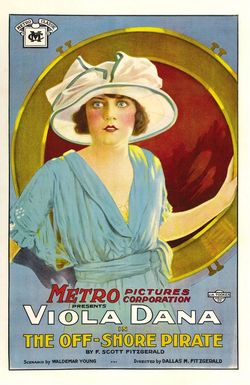
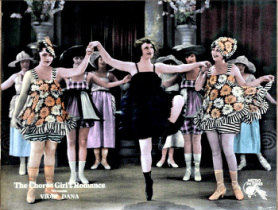
Pourtant, pendant la majeure partie de sa carrière, Fitzgerald était amoureux d'Hollywood et aspirait à devenir un célèbre scénariste. Dans sa jeunesse, il allait fréquemment au cinéma ; il admirait particulièrement Naissance d'une nation Comme le souligne Alan Margolies, Fitzgerald « s'est intéressé, peut-être fasciné, par la réalisation de films dès le début de sa vie ». Quand il est allé à New York après la Première Guerre mondiale, Fitzgerald a écrit avec frénésie et au début sans succès. De manière significative, sa liste d'écrits à cette époque plaçait ses scripts de film en premier. «J'ai écrit des films. J'ai écrit les paroles des chansons. J'ai écrit des programmes publicitaires complexes. J'ai écrit des poèmes .... » Quand son recueil de nouvelles intitulé Flappers et Philosophesa été publié, Fitzgerald a accepté avec joie l'argent offert par Hollywood pour transformer deux d'entre eux, "Head and Shoulders" (filmé sous le titre The Chorus Girl's Romance ) et "The Off-Shore Pirates" en films. 
Cet argent hollywoodien était important - finalement désastreux - pour le jeune auteur en difficulté, Zelda Sayres, qui avait auparavant rejeté sa proposition de mariage au motif qu'il était pauvre. Maintenant, Fitzgerald lui a télégraphié J'AI VENDU LES DROITS DU FILM DE LA TÊTE ET DES ÉPAULES À LA COMPAGNIE DE MÉTRO POUR VINGT CINQ CENT DOLLARS JE T'AIME MA CHÈRE FILLE. 
La richesse et les opportunités qu'Hollywood offrait à des écrivains comme Fitzgerald étaient l'un des nombreux facteurs qui expliquent sa relation amour-haine avec ce qui était maintenant la capitale du cinéma américain. Lui (et Zelda) adoraient également le cachet social et le glamour qu'il offrait, les fêtes, la chance de socialiser avec les idoles du cinéma, la perspective d'avoir un public énorme dans le monde entier qui contemple avec admiration quelque chose que l'écrivain a aidé à créer. Un scénariste à succès qui a travaillé avec Fitzgerald a affirmé que "Scott aurait préféré écrire un film que la Bible...." Fitzgerald, selon Budd Schulberg, "considérait que [les films] étaient la nouvelle forme d'art". Et Arthur Krystal dans son bel article sur Fitzgerald en tant que scénariste soutient qu'il était " 
Malheureusement, les talents de scénariste de Fitzgerald étaient loin d'être aussi bons que l'auteur aimait à le croire. Ses trois sorts travaillant à Hollywood ont produit d'excellentes sources sur lesquelles il a finalement basé The Last Tycoon et les nouvelles de Pat Hobby, mais ils ne lui ont pas apporté le succès dont il rêvait.
[Sources ci-dessus et ci-dessous :
 Aaron Latham, "Crazy Sundays: Scott Fitzgerald in Hollywood", http://fitzgerald.narod.ru/drama/latham-crazysund.html ;   Arthur Krystal, "Slow fade: F.Scott Fitzgerald in Hollywood", New Yorker, 11 nov.2009];  Judith S. Baughman http://www.sc.edu/fitzgerald/movies.html ;   Anne Margaret Daniel, "Les Fitzgerald à Hollywood,    Supplément littéraire du Times , 16 mai 2012 ; Charles McGrath, « Fitzgerald en tant que scénariste », New York Times, 22 avril 2004 ; Nick Finke, "Le grand livre de Fitzgerald", Date limite Hollywood,

Photo
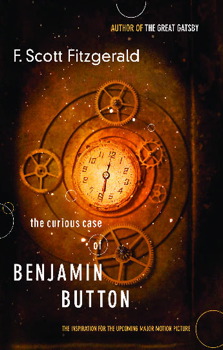
L'Étrange histoire de Benjamin Button n'était pas une très bonne nouvelle que Fitzgerald a vendue à Hollywood au début des années 1920 pour 1000 $. Il a fallu neuf décennies avant que le réalisateur David Fincher ne transforme le noyau fragile de l'histoire en un film captivant.

Photo
Ce film antinazi des années 1930 était le seul pour lequel Fitzgerald a reçu un crédit de scénariste (partagé).
Photo
Photo colorisée de la version cinématographique de la nouvelle de Fitzgerald "La tête et les épaules".
Photo
Fitzgerald était l'un des nombreux scénaristes qui ont travaillé sur le scénario de "Autant en emporte le vent".
Photo
Au cours de son dernier séjour à Hollywood, 1937-40, Fitzgerald a travaillé sur le scénario de "Madame Curie", y compris une scène de laboratoire.
Photo
MGM, qui à la fin des années vingt et trente était le premier studio, sa direction artistique était entre les mains remarquables du "garçon de génie" Irving Thalberg. Il était le modèle du producteur Monroe Stahr dans le dernier roman inédit de Fitzgerald, "L'amour du dernier magnat".
Photo

Les expériences hollywoodiennes de Fitzgerald

Lorsque Fitzgerald, accompagné de Zelda, se rend à Hollywood en 1927, il est au sommet de sa carrière littéraire. Cette année-là, son revenu annuel s'élève à près de 30 000 $. femme dont les journaux et les magazines sont l'emblème de l'ère du jazz. Sa production comprenait des best-sellers très appréciés comme This Side of Paradise , The Beautiful and the Damned et The Jazz Age . Comme le note Arthur Krystal, Fitzgerald "voulait être à la fois un grand romancier et un vedette d'Hollywood", ne reconnaissant jamais que les deux objectifs étaient incompatibles. Fait inquiétant, son roman le plus récent, The Great Gatsby (1925) , avait reçu des critiques indifférentes et des ventes médiocres. Sa carrière - et celle de Zelda - était sur le point de se dégonfler dans l'un de ces revers de fortune dépeints de manière si mélodramatique dans les biopics hollywoodiens. 
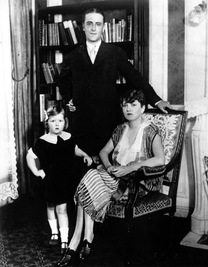
Fitzgerald's a été invité à Hollywood en 1927 pour écrire une comédie à clapet, Lipstick, avec une avance de 3 500 $. « Je croyais honnêtement, écrira-t-il plus tard, que sans aucun effort de ma part, j'étais une sorte de magicien des mots ; une étrange illusion de ma part alors que j'avais travaillé si désespérément pour développer un style de prose coloré et dur. .. Résultat total : un bon moment + pas de travail." L'auteur et Zelda ont fait la fête frénétiquement pendant leurs deux mois à Hollywood, vivant dans le luxe à l'hôtel Hollywood ; aucun scénario n'a jamais été produit." Zelda a écrit à leur fille, Scottie, âgée de six ans (déposée avec ses parents) que Scott "dit qu'il n'écrira plus jamais une autre image parce que c'est trop dur, mais je ne pense pas que les écrivains pensent ce qu'ils disent quand ils écrivent sur le travail.".
Zelda a également dit à Scottie que ses parents avaient vu le film de 1926 The Great Gatsby dans un cinéma hollywoodien. "C'est pourri et horrible et terrible et nous sommes partis.". Après quelques semaines, le couple a quitté LA, a récupéré leur fille et est retourné en Europe.
Lorsque Fitzgerald revint à Hollywood en juillet 1937, il n'était plus le personnage légendaire qu'il avait été. Sa réputation littéraire et ses revenus s'étaient tous deux effondrés, il avait passé la majeure partie de la trentaine sous l'emprise de l'alcoolisme, la constitution et la mentalité fragiles de Zelda avaient entraîné son institutionnalisation. Afin de payer son traitement et l'éducation et l'entretien de sa fille Scottie, il est retourné à Hollywood pour son dernier passage en tant que scénariste, travaillant dans un petit bureau à la MGM. Initialement, il a été payé 1 000 $ par semaine pendant six mois, puis il a finalement augmenté à 1250 $ par semaine pendant un an à une époque où la moyenne annuellele salaire était de 1780 $. Budd Schulberg a décrit Fitzgerald à ce stade comme « fatigué, malade, assiégé, vaniteux et fier et douloureusement conscient de sa perte de notoriété ». Bien qu'il se décrive comme "un homme assez brisé et prématurément âgé qui n'a pas un sou à part ce qu'il peut obtenir sans un esprit fatigué et un corps malade".

Photo
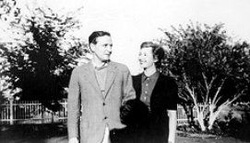
Fitzgerald et Sheilah Graham.
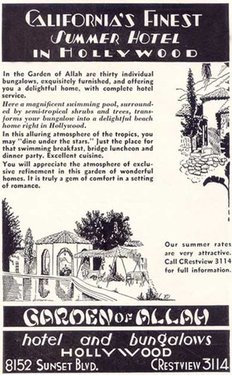
Pourtant, Fitzgerald croyait toujours qu'il pourrait gagner de l'argent à Hollywood s'il jouait astucieusement sa main. Il écrit à Scottie : "Je dois faire preuve de beaucoup de tact mais garder la main sur le volant. Trouvez l'homme clé parmi les patrons + le plus malléable parmi les collaborateurs. Avec une pause je peux leur faire doubler ce contrat en deux ans." Il s'est d'abord enregistré au luxuriant Jardin d'Allah, a étudié des scénarios et des films à succès, a pris de nombreuses notes sur les techniques d'écriture de scénario et a commencé à travailler sur des films de premier plan, notamment  Autant en emporte le vent ,   A Yank à Oxford  et  Madame Curie. Fitzgerald a reçu son seul crédit d'écran (partagé) pour son travail sur les trois camarades bien reçus . Il a également noué une relation harmonieuse avec Sheilah Graha, chroniqueuse acerbe de potins hollywoodiens d'origine anglaise, qui l'a aidé dans sa lutte contre l'alcoolisme et a emménagé avec elle. Mais MGM n'a pas renouvelé son contrat et l'a laissé partir. "J'en ai fini", a-t-il écrit. Juste avant sa mort, il a déclaré : "Hollywood n'est-il pas un imbécile au sens humain du terme, une ville hideuse, signalée par les jardins insultants de ses riches, pleine d'esprit humain à un nouveau bas de l'avilissement."
La carrière hollywoodienne de Fitzgerald s'est donc soldée par un échec. Malgré sa conviction qu'il avait des talents d'écrivain qui ont été ignorés par des collègues jaloux et des directeurs de studio débiles incapables d'apprécier son génie. La récente découverte scientifique et l'analyse des scripts de Fitzgerald montrent qu'il n'était tout simplement pas très bon dans son travail. Son travail était souvent verbeux, compliqué et turgescent. L'un des grands scénaristes et réalisateurs d'Hollywood, Billy Wilder, l'a résumé : Fitzgerald était « un grand sculpteur qui est engagé pour faire un travail de plomberie ». Et il n'était pas un bon plombier. Il a peut-être eu une vision de ce qu'il voulait à l'écran, mais il n'avait pas la capacité de traduire cette vision sous forme cinématographique. Il en voulait également à la nature collégiale de la scénarisation des grands studios, contrariant ses collègues, tels que l'influent et très bon Joseph Mankiiewicz (citoyen Kane ). Le sentiment de droit et de privilège qui entourait Fitzgerald (et Zelda) ne jouait pas bien dans un Hollywood où la plupart des chefs de studio, des acteurs et des techniciens venaient de milieux plus modestes.
Le 21 décembre, Fitzgeralld était avec Graham lorsqu'il a subi une crise cardiaque mortelle en mangeant une barre chocolatée et en lisant le magazine des anciens de l'Université de Princeton. (Il a eu une attaque précédente quelques années plus tôt et peut également avoir été atteint de tuberculose). 

Vingt-cinq personnes ont assisté aux funérailles.; Fitzerald s'est vu refuser l'enterrement dans la parcelle familiale du cimetière St. Mary's à Rockville. Il a donc été enterré dans le cimetière protestant de Rockville Union à trois kilomètres de là, par un   pasteur presbytérien qui n'avait aucune idée de qui était Fitzgerald . Des années plus tard, sa fille Scottie réussit à le faire réenterrer avec Zelda à St. Marys.  Sa mort semblait prouver la vérité d'un de ses célèbres adages : « Il n'y a pas de second acte dans la vie américaine.


Photo
Fitzerald vécut un temps dans cet hôtel de luxe, malgré ses problèmes économiques. Quand il a emménagé, il s'est envoyé une carte postale : « Cher Scott, comment allez-vous ? J'avais l'intention de venir vous voir. J'ai vécu au Jardin d'Allah. Bien à vous, Scott Fitzgerald.
Photo
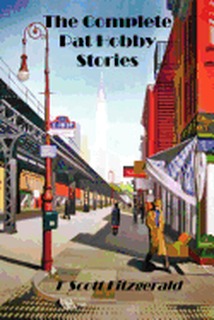
Lors de son dernier séjour à Hollywood, Fitzgerald a écrit plusieurs nouvelles pour le magazine Esquire. Ils étaient basés sur le personnage de Pat Hobby, un scénariste raté de 49 ans mis à mal. Désabusé, sans le sou, Hobby est un personnage séduisant et attachant et ces histoires sont d'autant mieux leur manque de prétention et leurs affectations de style.
Photo
Dernière demeure des Fitzgerald.
Photo
Photo
Photo
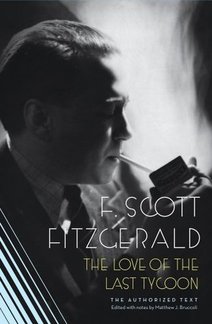
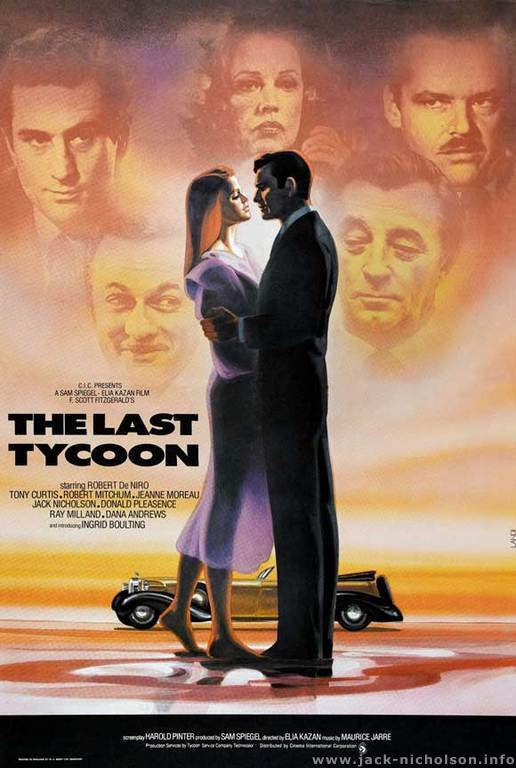
À la mort de Fitzgerald en 1940, il a laissé le manuscrit inachevé d'un roman sur Hollywood, L'amour du dernier magnat, dont le personnage principal Monroe Stahr était basé sur le remarquable cadre de la MGM, Irving Thalberg. Le roman a généralement été publié sous le titre The Last Tycoon; bien qu'inachevé, il montre Fitzgerald à son meilleur, en partie parce qu'il avait enfin surmonté son style gêné, maniéré et écoeurant qui gâche la plupart de son travail.
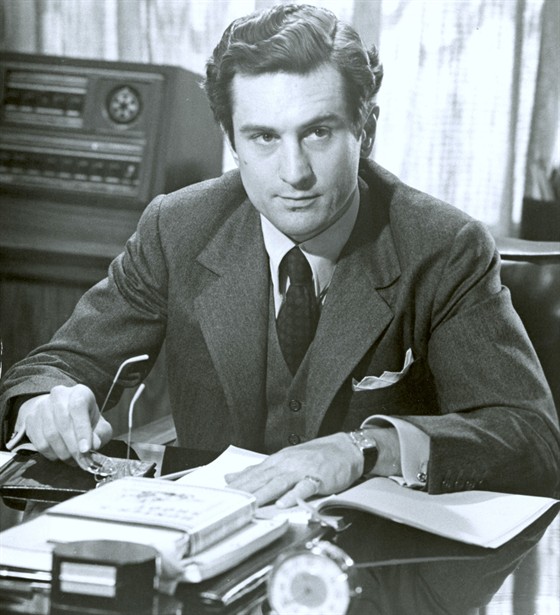
En 1976, le réalisateur Elia Kazan a réalisé un film intéressant mais pas tout à fait réussi - son dernier. Son scénario était de Harold Pinter et il mettait en vedette Robert De Niro dans l'une de ses performances les meilleures, les plus sobres et les plus sympathiques. Tony Curtis, Donald Pleasance et Robert Mitchum étaient également très bons, éclipsant Jack Nicholson qui semblait dépassé.
=====================================================================

Francis Scott Fitzgerald, magnifique et désespéré

Ajouter l'article à vos favorisRetirer l'article de vos favoris

RENTRÉE LITTÉRAIRE

Stewart O’Nan a plongé dans la vie de l’auteur du «Dernier Nabab» et raconte l’écrivain, devenu scénariste, et qui erre, malheureux, dans un Hollywood vulgaire et décatis

Francis Scott Fitzgerald. (Crédit photo: Getty Images) — © Time Life Pictures

Parce que la vie de Francis Scott Fitzgerald fut de bout en bout romanesque, Stewart O’Nan en a fait… un roman. Pas pour raconter les deux décennies enchantées où l’auteur de Gatsby courtisait la gloire au bras de l’extravagante Zelda, mais pour le mettre en scène au cœur de son purgatoire. Une traversée de la nuit qui dura quatre années, avant le glas final – cette crise cardiaque que le terrassa le 21 décembre 1940, à 44 ans.

Gin et turberculose

Lorsque s’ouvre le récit de Stewart O’Nan, au printemps 1937, les jeux sont faits. Rien ne va plus pour l’ex-icône de la «Génération perdue», que l’on découvre reclus – et ruiné – dans une chambre d’hôtel d’Asheville, en Caroline du Nord, près de la clinique où Zelda vient d’être internée. Égarée dans sa folie, elle a failli se suicider et il ne reste d’elle qu’un pâle fantôme au visage dévasté. De quoi accabler un peu plus le pauvre Scott, qui s’apprête lui aussi à toucher le fond.

A 40 ans, il n’a quasiment plus rien, pas même de domicile fixe. Après une longue série de revers, il s’est remis au gin – trop, beaucoup trop – et sa tuberculose s’est aggravée. Écrire? Il s’y attelle chaque matin, drapé dans un peignoir, mais l’inspiration le boude cruellement. Panne sèche. «Toute vie est bien entendu un processus de démolition» a-t-il noté un an auparavant dans La fêlure, des mots qui sonnent comme une épouvantable prophétie.

La Metro

Les sirènes qui vont alors lui tendre la main sont aussi providentielles que démoniaques: à Hollywood, la Metro Goldwyn Mayer lui propose un job de scénariste. Avec, à la clé, mille dollars par semaine, une aubaine pour éponger ses dettes – et son spleen. Le voilà donc débarqué à Los Angeles, où il s’empresse d’aller saluer les flots du Pacifique, qui lui rappellent ses folles années – lorsque la fête battait son plein et qu’il défrayait la chronique sur d’autres rivages, ceux de la Riviera française, en compagnie de Zelda.

Tabellion

Stewart O’Nan raconte par le menu comment, confiné dans un bureau donnant sur un terrain vague, Scott va découvrir cette gigantesque machine à rêves qu’est Hollywood. Il y jouera pourtant le pire des rôles, celui du tabellion, celui du pisse-copie chargé de rewriter des histoires auxquelles il ne croit pas. Un calvaire, même lorsqu’il doit adapter Autant en emporte le vent, en reprenant les dialogues de Margaret Mitchell. «C’était pour lui comme essayer de finir un immense puzzle avec de mauvaises pièces» écrit Stewart O’Nan, qui cueille souvent son héros au petit matin, gueule de bois et cœur en berne.

La veille, du côté de Sunset Boulevard, il a festoyé avec les célébrités de l’époque, des gloires désormais fanées. Marlène Dietrich, qui a perdu l’éclat de sa jeunesse. Bogart, qui «ressemble à une poupée musclée, la tête trop grosse pour le corps». Hemingway, agrippé à sa béquille et à ses fantasmes révolutionnaires. Gary Cooper, grand échalas égaré parmi une faune de «gnomes à lunettes, scénaristes et metteurs en scène aux crânes dégarnis».

Ombre

Comme eux, Scott n’est plus que l’ombre de lui-même et son vieux démon – l’alcool – le talonne sans cesse dans cette ville qui, «malgré sa beauté tropicale, était d’une vulgarité aussi typiquement américaine que l’industrie cinématographique, laquelle prospérait sur le dos des vagues successives d’exilés prêts à tout pour y travailler». Et pourtant, même s’il a le sentiment d’être lui aussi un de ces exilés, Scott ne jette pas l’éponge en affrontant, chaque matin, cette page blanche qui a été sa raison d’être, toute sa vie.

«Il continuait de penser qu’il était aussi bon que les autres, écrit Stewart O’Nan, et quand il terminait un paragraphe qui lui avait coûté des efforts, il hochait la tête avec la satisfaction d’un artisan, allumait une Raleigh de plus et poursuivait sa tâche.» Cette tâche sera son chant du cygne, un roman au titre emblématique, hélas inachevé: Le dernier nabab, âpre voyage au cœur du mirage hollywoodien – «une tragédie», note Scott.

C’est ainsi que nous avançons, barques luttant contre un courant qui nous rejette sans cesse vers le passé. (Francis Scott Fitzgerald, dernière phrase de Gatsby le magnifique)

Malibu

Au loin, Zelda lui lance des SOS, par-delà l’horizon. Il prend parfois le train pour la rejoindre dans sa clinique d’Asheville et lorsque, de retour en Californie, il rencontrera une journaliste qui ressemble trait pour trait à sa «princesse ensorcelée», il en tombera amoureux. Elle s’appelle Sheilah Graham et Scott fera un bout de chemin avec cette fille d’une blanchisseuse ukrainienne qui dissimule ses origines dans un monde où triomphent l’esbroufe et l’artifice. Mais, caché dans les coulisses, le fantôme de Zelda est toujours là, observant ces «deux réfugiés qui s’escriment à fuir leur passé» entre les plages de Malibu et les studios de la MGM…

Derniers mots

Sous les feux de Sunset – l’envers du paradis –, Scott ne trouvera jamais sa place, ni comme scénariste, ni comme amant, ni comme époux. Ni comme père, quand sa fille Scottie sort de sa pension pour venir passer quelques jours avec lui sur la côte Ouest – des retrouvailles trop éphémères qui le culpabilisent.

C’est donc le portrait d’un sursitaire expulsé de sa propre légende que brosse Stewart O’Nan qui, pour signer ce récit vibrant de mélancolie, s’est nourri des multiples biographies de Fitzgerald. Il a suivi très scrupuleusement les faits mais son imagination a tout réinventé. Afin que la fiction ait le dernier mot. Afin de rendre plus présent, plus vivant, plus proche de nous, celui qui n’avait jamais renoncé de prendre le parti du rêve, même aux pires moments.

Jusqu’à la scène ultime où, à la veille de Noël 1940, Scott s’effondre en protestant contre le destin, qui ne lui a pas permis de terminer Le Dernier Nabab. Et l’inconsolable Zelda s’exclamera, au lendemain de sa mort: «L’âme aspire à être comprise. La mienne ne le sera plus jamais si profondément, maintenant qu’il a disparu.»


Stewart O’Nan, Derniers feux sur Sunset, Trad de l’américain par Marc Amfreville, L’Olivier, 395 p.